CAU, Hereon and UKSH agree on cooperation for digital implant research
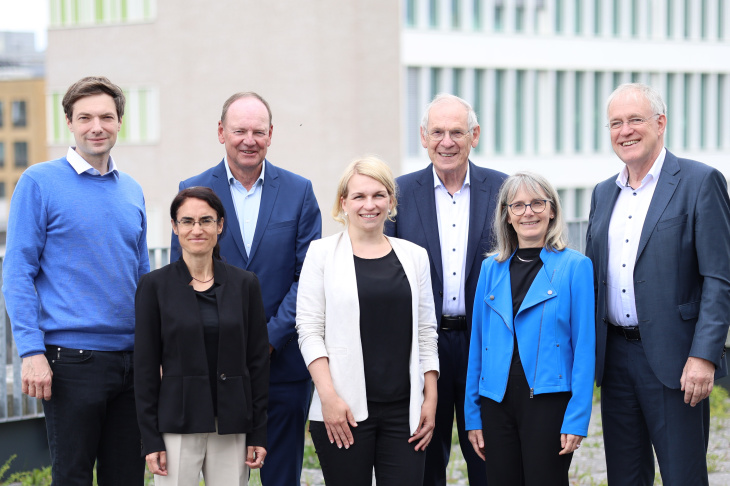
Confident and full of anticipation after the successful founding symposium on 10 June 2024 in Kiel: The members of the founding team (from left to right) Prof. Cyron, Prof. Checa, Prof. Jansen, Prof. Saalfeld, Prof. Deuschl, Prof. Willumeit-Römer and Prof. Quandt. Further founding team members (not pictured): Prof. Tomforde and Prof. Popp.
Photo: Kiel University (CAU)
Prof. Dr. Regine Willumeit-Römer, co-initiator of the collaboration and Director of the Institute for Metallic Biomaterials at Hereon: "The future of implant development lies in the use of computer simulation models and artificial intelligence, which map the complicated development cycle from material to tissue regeneration and ultimately flow into the authorisation process. In this way, existing implants can be improved and further developed into personalised implants based on individual, molecular body characteristics." The research centres on digital twins that depict physiological and material science conditions in computer models.
With the help of these digital twins, new implants are no longer developed at the workbench, but on a high-performance computer and are no longer heuristically acceptable, but comprehensively optimised to meet medical needs.
The contribution of the Institute of Metallic Biomaterials lies in the provision of data on Mg-based and thus degradable implants in a biological environment, the realisation of corresponding experiments and simulations. Prof Willumeit-Römer also acts as project coordinator.
IDIR website